A Favorite Variant: The XV Sudoku Puzzle
As an Amazon Associate, I earn from qualifying purchases.
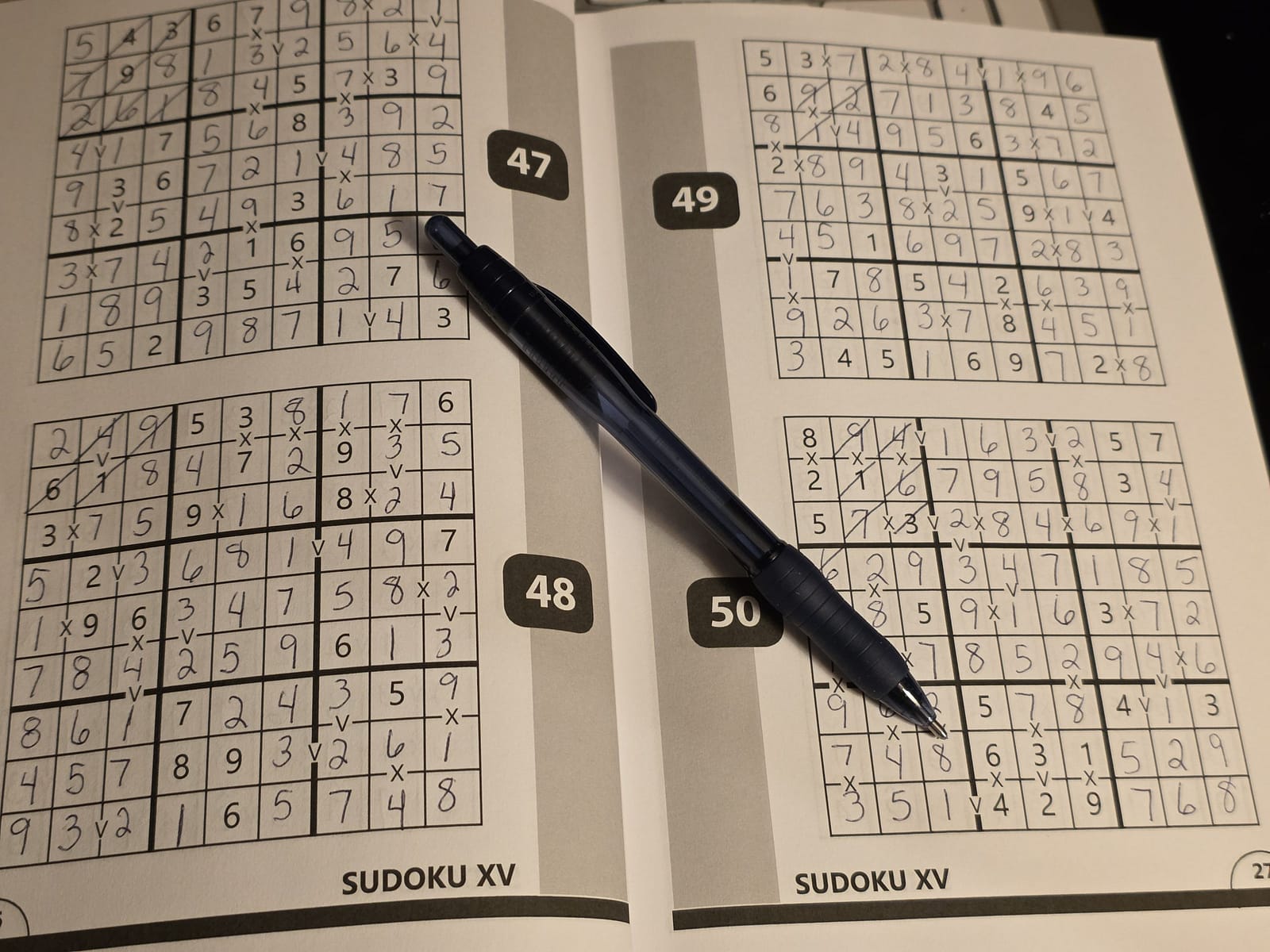
I just wanted to share a quick note about one of my favorite Sudoku variants — the XV Puzzle.
Most of us are familiar with the classic Sudoku rules:
numbers 1 through 9 must appear once (and only once) in each row, column, and 3×3 box.
The XV puzzle adds an additional layer of logic.
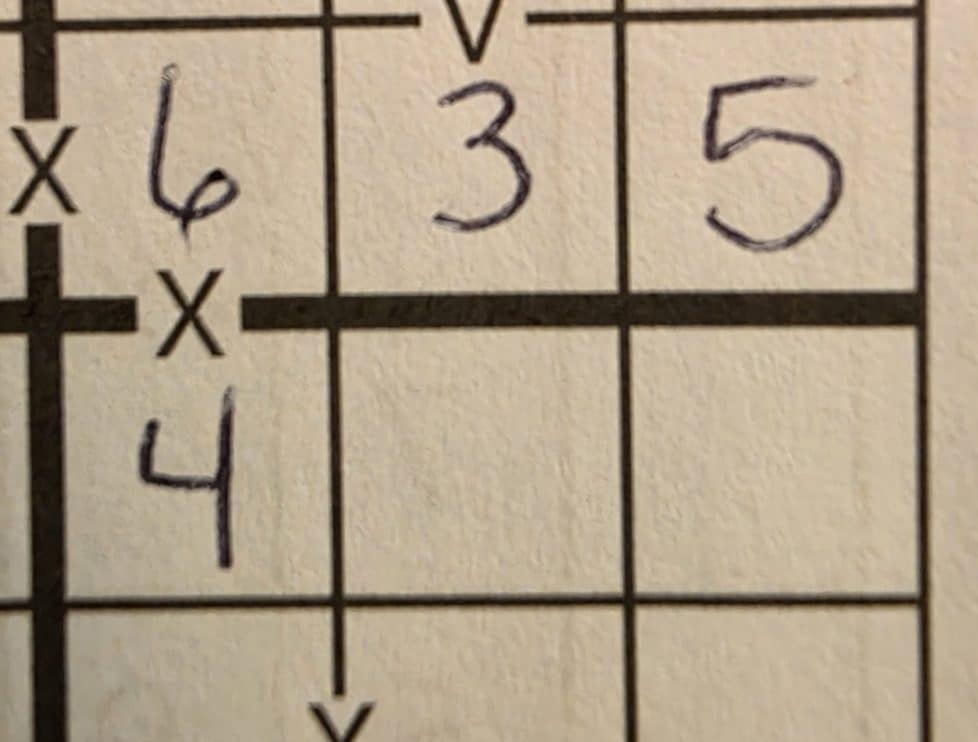
When a V appears between two cells, those two numbers must add up to 5.
When an X appears, the numbers must add up to 10.
At first glance, this seems like a small twist — and it does often help you fill in a few cells right away — but the real magic of this variant goes beyond the obvious.
🔍 The Hidden Strength of XV Logic
Any cell that has a V or X on its border cannot be a 5.
And in most XV puzzles, you can assume that all possible V and X relationships are marked.
That means the absence of a marker becomes just as important as its presence.
For example:
If a cell next to a 2 could be either a 3 or a 4:
- If there is no V, then it cannot be 3 (since 2 + 3 = 5 would require a V)
- So it must be 4
Similarly:
- If 8 is also a possibility
- It would only work if there were an X (since 2 + 8 = 10)
- Without an X, that option is eliminated too
This kind of negative constraint is where XV really shines — it helps resolve situations that might otherwise require long chains or advanced techniques.
🧩 Why I Enjoy This Variant
I find that many puzzles eventually come down to long chains or linked pairs.
But with XV, if even one of those possibilities violates a V or X condition, the correct path often becomes clear much faster.
It adds structure without overwhelming complexity — which makes it both satisfying and approachable.
📚 Try It Yourself
If you’re curious to explore this variant, you can find a puzzle book here:
If you enjoy classic Sudoku but want to gently expand your solving toolkit, XV is a really fun place to start.
To see what types of tools I use when puzzling – visit my Reference Shelf. For a closer look at how the number 5 behaves in these kinds of puzzles, visit my post about how the number 5 acts very weird in XV Sudoku.