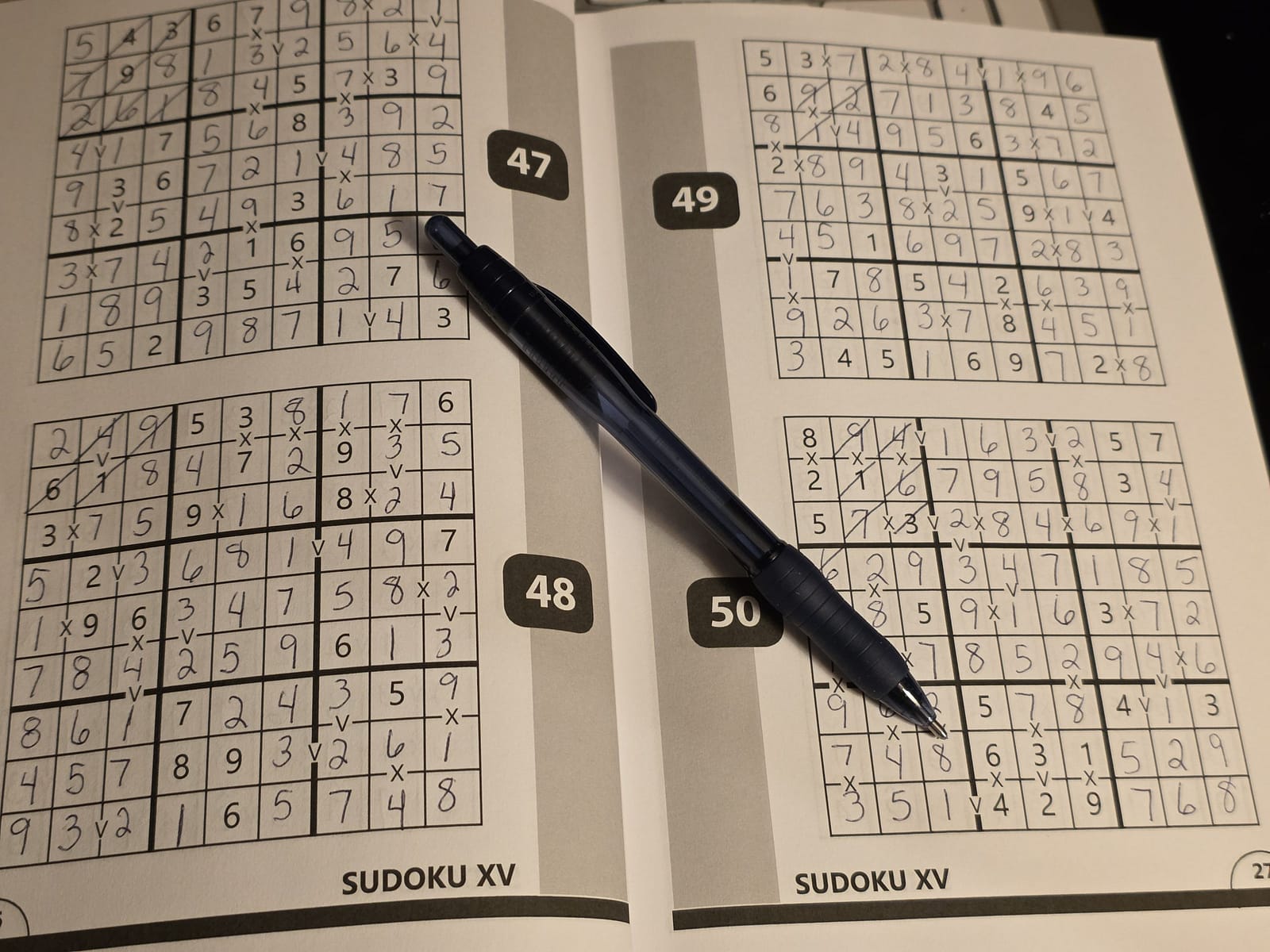
The Number 5 Gets Very Weird in XV Sudoku
As an Amazon Associate, I earn from qualifying purchases.
One of my favorite things about XV Sudoku is how quickly certain numbers start behaving differently from standard Sudoku — especially the number 5.
In XV Sudoku:
- A V means two connected cells must add to 5
- An X means two connected cells must add to 10
At first this seems simple enough, but it creates a surprisingly interesting side effect:
A cell connected to an X or V can never contain a 5.
That means the number 5 often starts “isolating itself” much earlier than expected.
Sometimes an entire row or box suddenly has only one possible location left for a 5 simply because nearby XV relationships quietly eliminate the other options.
I love this because it turns the puzzle into a series of tiny local observations instead of only long solving chains.
It feels less like brute force and more like noticing little relationships hidden inside the grid.
If you enjoy classic Sudoku and want a variant that feels approachable while still adding an extra layer of logic, XV Sudoku is a really fun place to start.
If you would like to try out some puzzles too, this is where you can find my favorite XV puzzle book.
For more information about why I love XV, check out my first XV puzzle post.
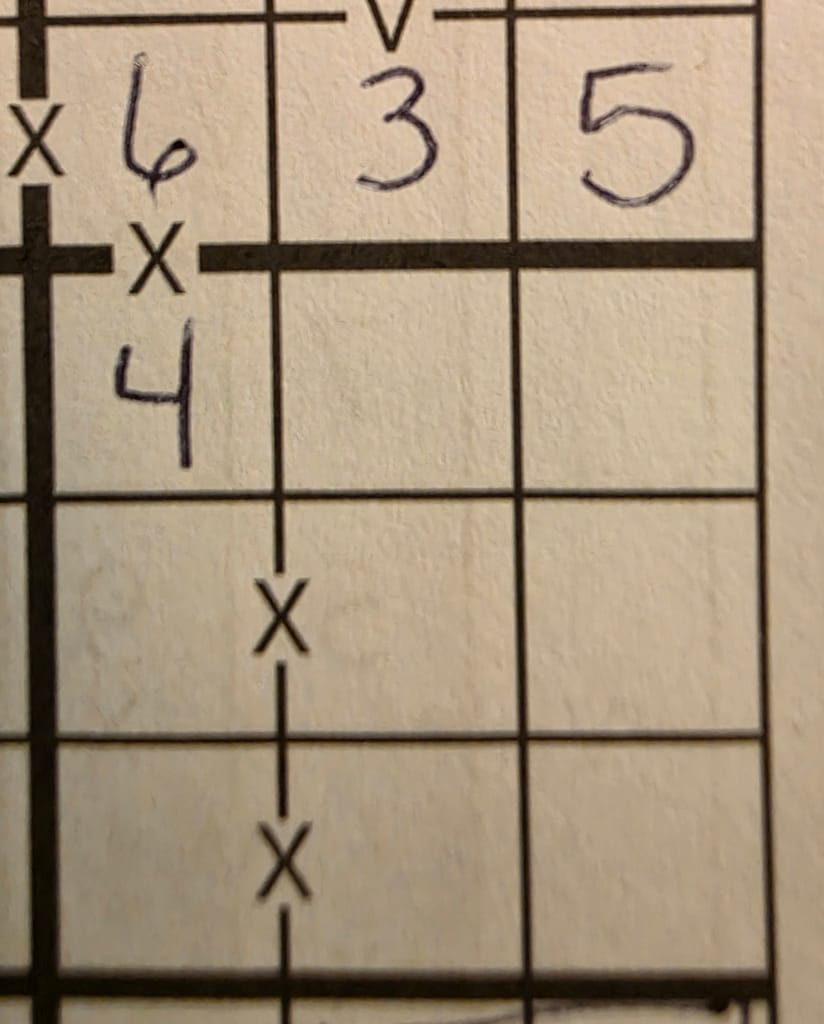
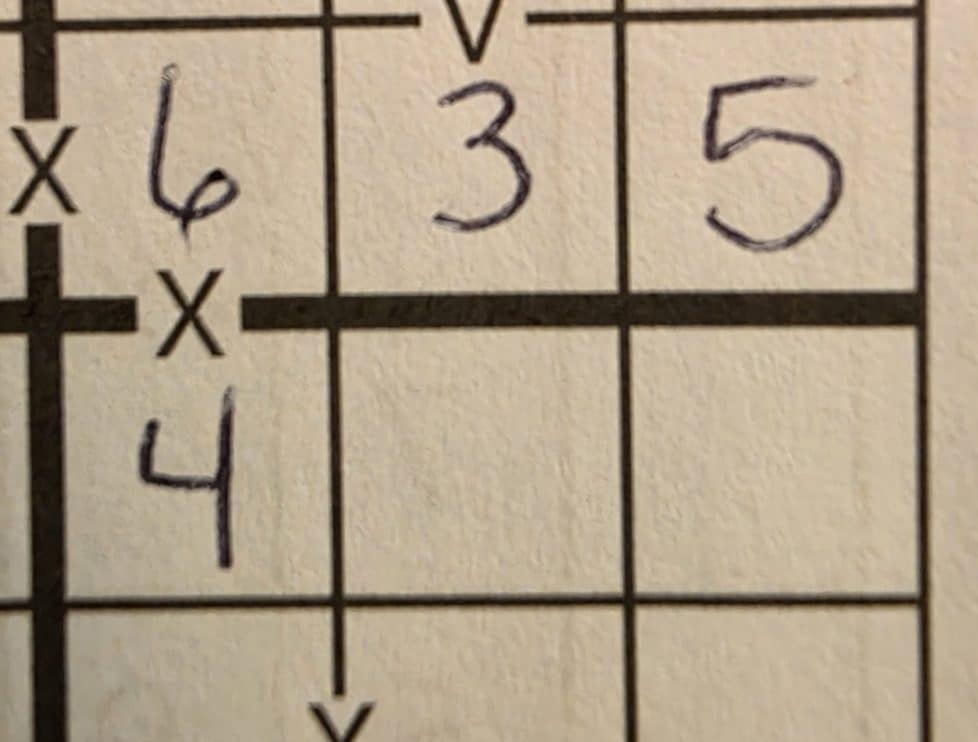
And just to show you an example of what I call Five being all Five-ish, here we have a grid where just the one block with only the 4 filled in, we can already see exactly where the 5 will fall.
The 5 to the right eliminates all the cells in the right column and the Xs that take up the remaining cells in the 2nd and 3rd row of this box eliminate those cells, so the 5 can only go right next to the 4!
And if you want to see what kinds of tools come in handy for sudoku puzzles, see my recommended sudoku tools.