Behind the Pattern: Designing the QT Pi Afghan
Some crochet projects begin with a carefully planned color palette and a shopping trip for the perfect yarn.
This wasn’t one of those projects.
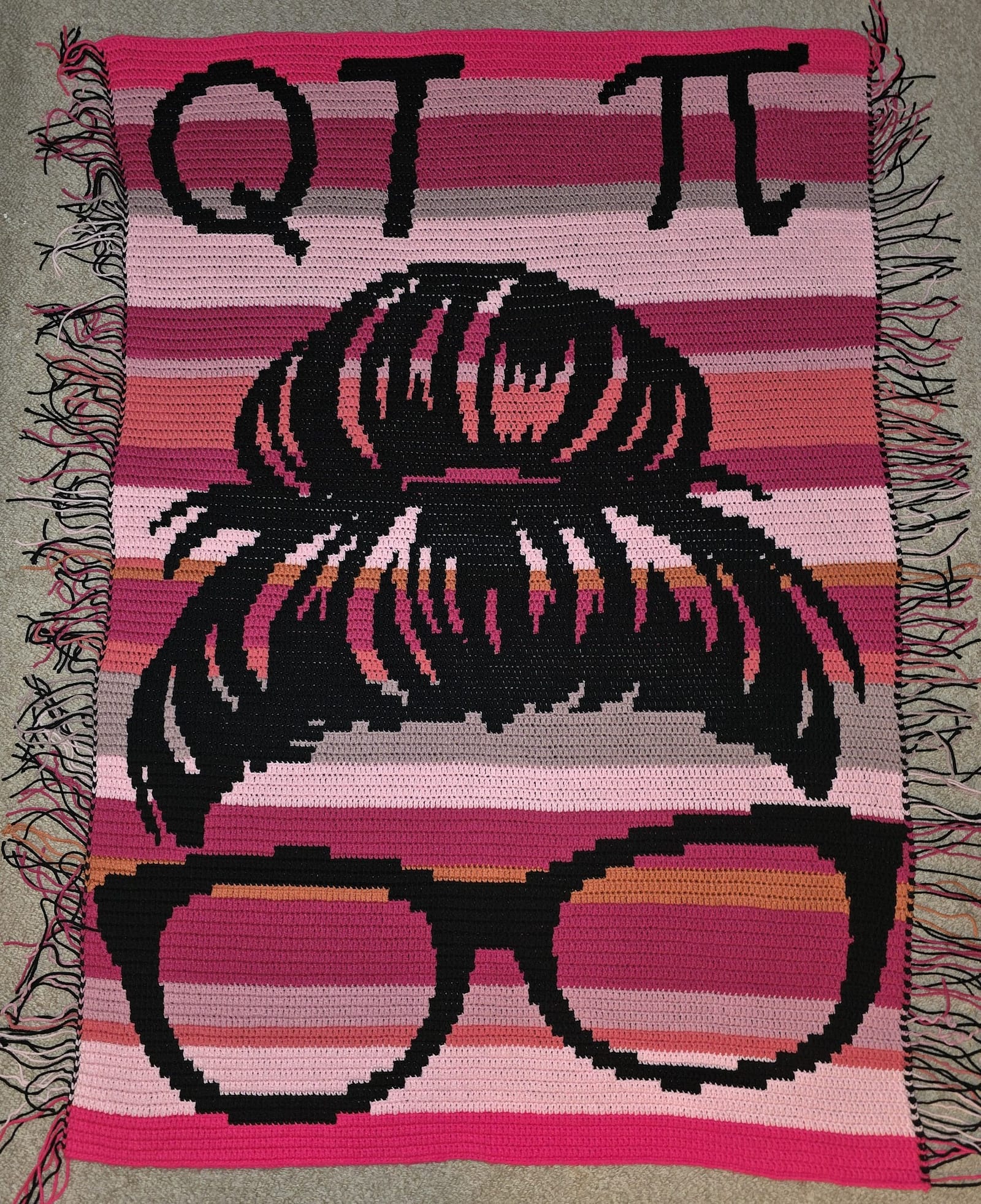
The idea for the QT Pi Afghan came first—a playful design featuring a messy bun, oversized glasses, and the mathematical symbol π. As someone who enjoys puzzles, programming, and all things a little geeky, the concept immediately made me smile. I wanted to create something cozy that celebrated those interests in a fun, lighthearted way.
Once the chart was designed, it was time to choose the yarn.
Or so I thought.
A Stash-Busting Adventure
Instead of heading to the yarn store, I started digging through my stash to see what I already had.
What I discovered was a surprising collection of single skeins and partial skeins in shades of pink, coral, and mauve. They weren’t a matching collection by any stretch, but together they felt like they belonged.
At that moment, this project transformed from “another afghan” into a stash-busting adventure.
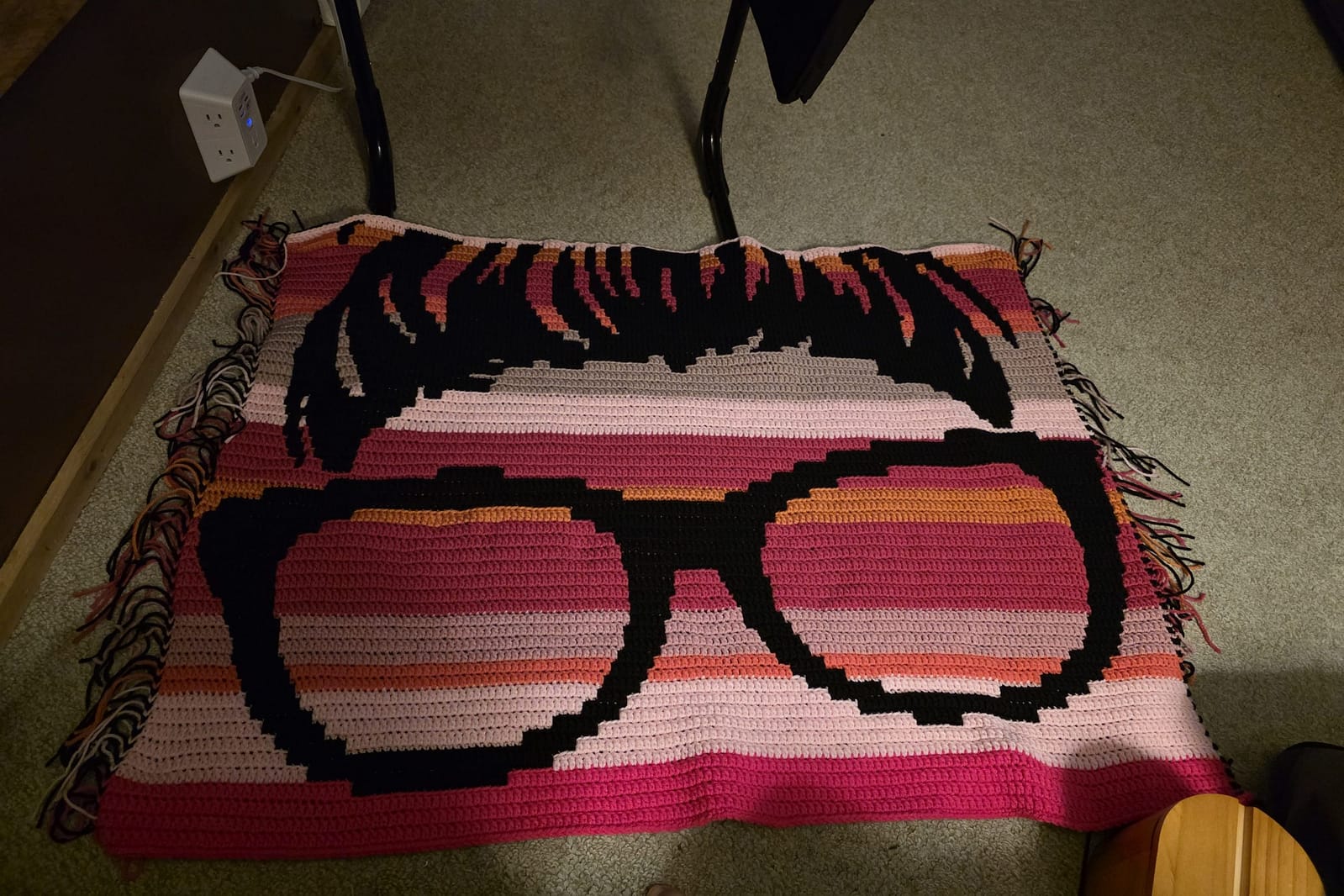
Rather than trying to make every stripe perfectly uniform, I decided to embrace the variety. Some colors would only appear for a couple of rows while others would stick around a little longer. I hoped that varying the widths would create a more organic background instead of making the blanket feel overly striped.
Looking back now, I’m really glad I trusted that instinct.
Vintage Yarn Finds
One of my favorite surprises happened while digging through those old skeins.
Mixed in with the newer yarn were a couple of vintage skeins that had been patiently waiting for decades to become part of something special. Their names were Cherry Frost and Antique Rose, colors that dated back to the 1970s and 1980s.
There’s something satisfying about finally giving forgotten yarn a purpose.
I like imagining how many years those skeins quietly waited before becoming part of this blanket.
Trusting the Process
There were quite a few moments during this project where I wondered if I was making the right decisions.
Were the stripes too random?
Should I change colors more often?
Were the glasses too close to the edge of the blanket?
Would all of these different pinks actually work together?
When you’re looking at one row at a time, it’s surprisingly easy to second-guess yourself.
But something magical happens once the project reaches a certain point.
Instead of seeing individual stripe widths and color choices, you start seeing the design as a whole.
The background quietly steps back.
The silhouette becomes the focus.
All those little decisions begin working together.
It’s a good reminder that creativity often asks us to trust the process before we can see the finished picture.
A New Favorite Hook
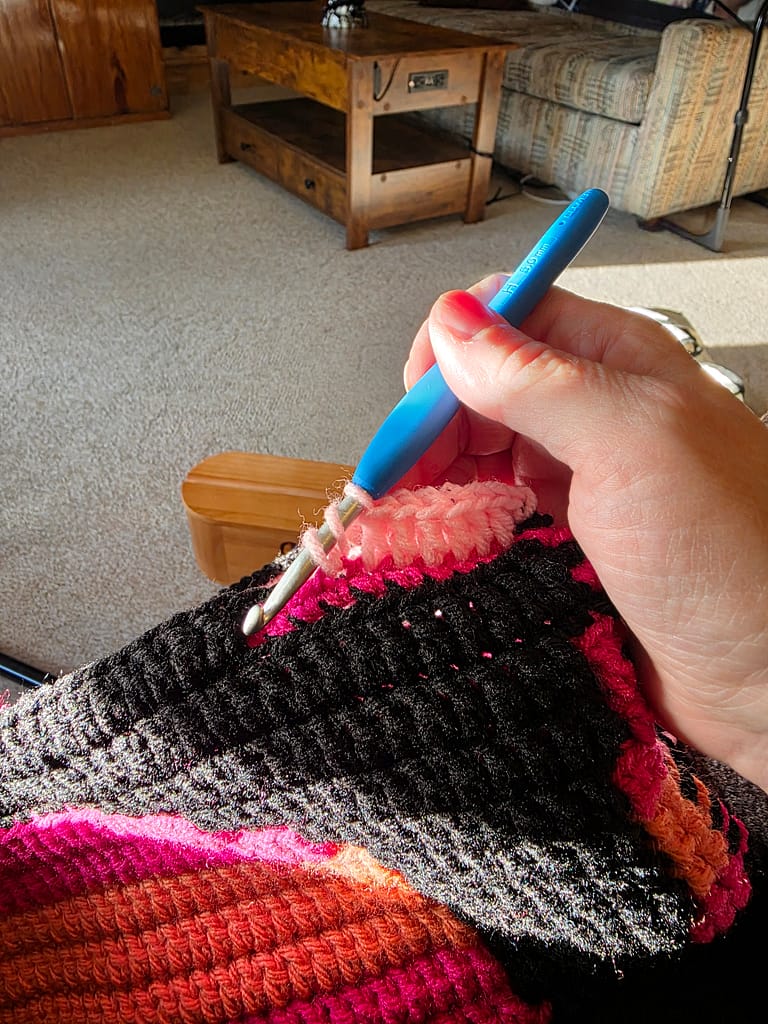
About twenty rows into the project, my new ergonomic crochet hook arrived.
I’ll admit I hesitated before switching hooks in the middle of a blanket. Changing tools halfway through felt like tempting fate, but fortunately my gauge stayed consistent and the transition was seamless.
I haven’t reached for another hook since.
Sometimes the smallest upgrade makes the biggest difference during a long project.
The Finished Blanket
When the blanket was spread out for the first time, I realized this project had become something I hadn’t originally planned.
It wasn’t just a fun geeky afghan anymore.
It had become a memory of using what I already had.
Of finally finding a home for decades-old yarn.
Of solving little design problems one row at a time.
Of trusting that all those seemingly random colors would eventually come together.
And they did.
Make It Your Own
Although my sample uses shades of pink with black for the design, this pattern would look wonderful in almost any color combination.
Classic black and white would give it a modern graphic feel.
School colors would make a thoughtful teacher gift.
Bright rainbow stripes would add even more personality.
Or, like I did, you could simply begin with your own stash and see where it leads.
Sometimes the yarn you already have is exactly what your next project has been waiting for.
If you’d like to make your own QT Pi Afghan, the pattern includes:
- Written row-by-row instructions for both left- and right-handed crocheters
- The full chart
- QR codes linking to helpful mosaic crochet tutorials
Whether you’re making it for yourself or for the favorite math teacher, engineer, programmer, or puzzle lover in your life, I hope it brings you as much joy to create as it brought me to design.
Happy crocheting!
As an Amazon Associate, I earn from qualifying purchases.
🧰 Tools & Supplies I Recommend
The Yarn Winder I tested for Amazon Vine review turned out to be a fun and helpful tool!
My Clover Amour Crochet Hook is my newest best friend!
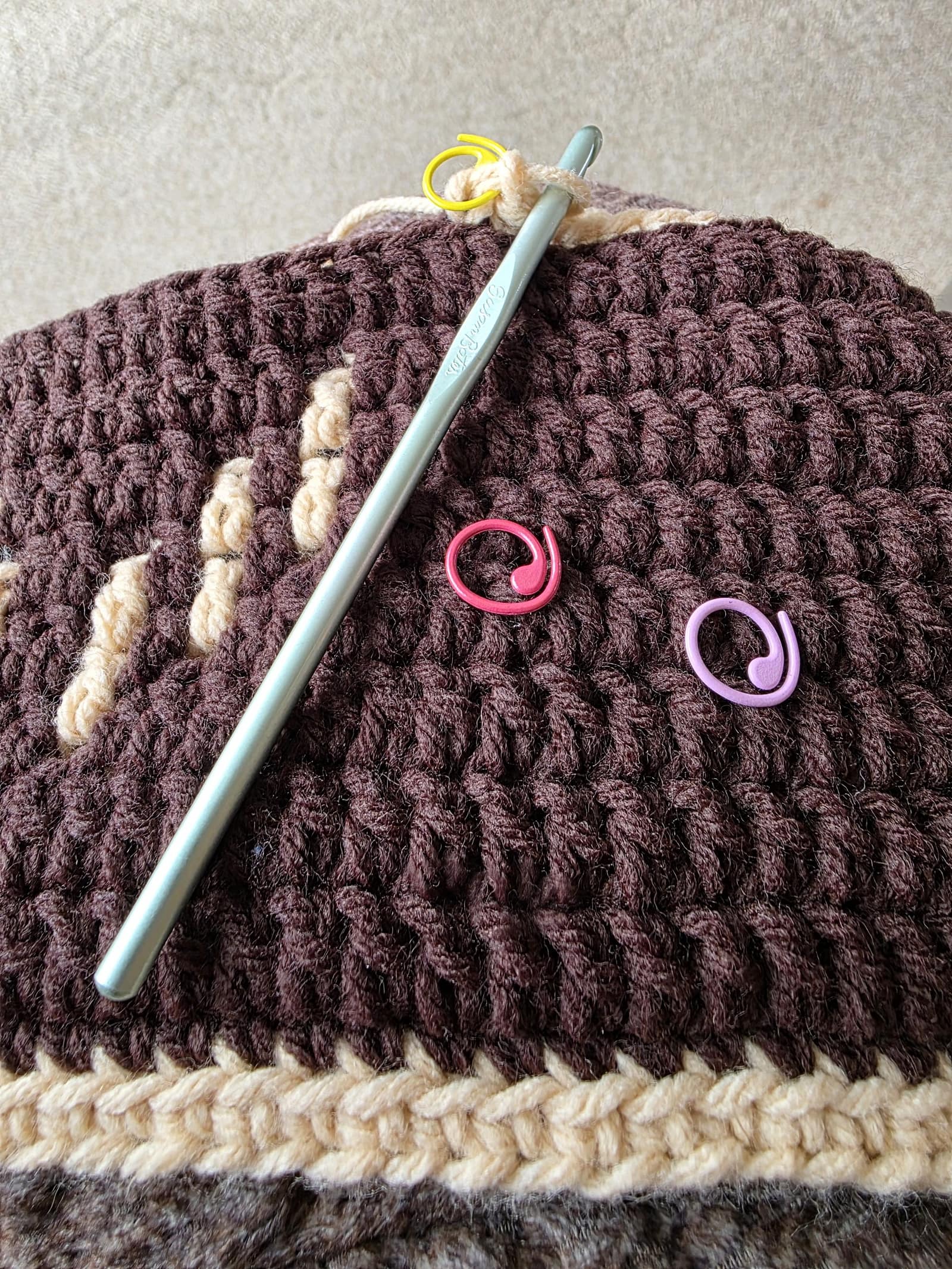
I love these spiral stitch markers – they are so easy to place and remove quickly.
To avoid capping and uncapping highlighters while keeping track of what I’ve done on patterns, bible highlighters have been very effective.
To block my projects when finished, blocking mats and this blocking pins kit have been exactly what I’d been needing!