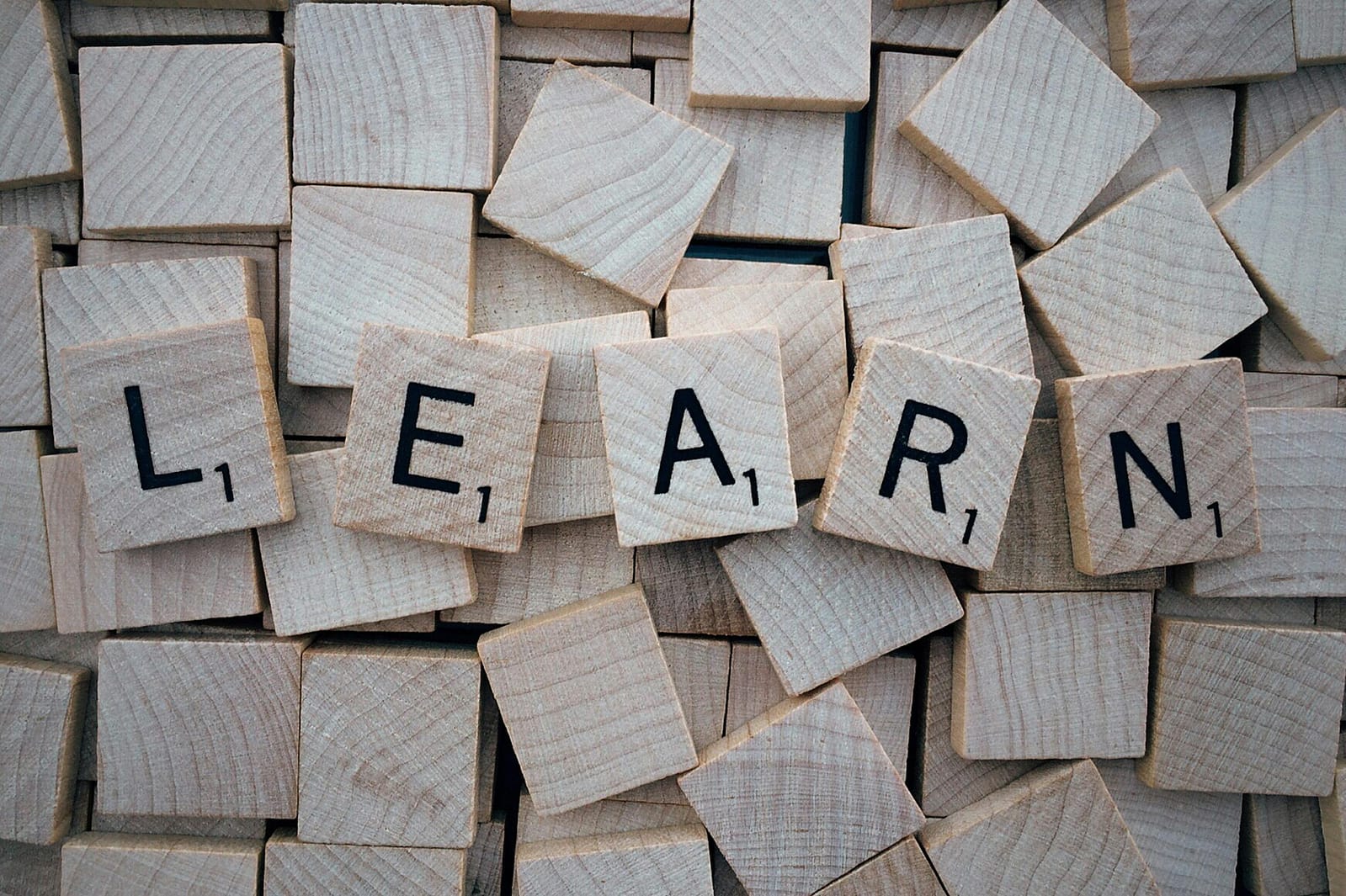
A Hundred Days, A Hundred Sparks:
What I Learned From Trying to Learn Something New Every Day
The idea arrived on an ordinary morning.
I was getting ready for work, thinking about the little habits my health app nudges me toward—five deep breaths, twenty minutes of a hobby, small boxes to tick in the name of “self-improvement.” Helpful, sure. But part of me wanted something that felt more… alive. More me.
Then a thought popped in:
What if I tried to learn something new every day for 100 days—and wrote about it?
Out of curiosity, I opened a calendar and counted forward.
Day 100 landed exactly on my birthday.
Divine timing? Random chance? Or some long-forgotten note I once did the math on and tucked away in my subconscious? I’ll probably never know. But it felt like a nudge I couldn’t ignore. So I said yes.
I called it my 100 Days of Learning Challenge.
How It Started: Small Lessons, Big Curiosity
At first, it was fun—like turning the whole world into a scavenger hunt for “new things.”
On that first day, I watched our IT person remotely adjust network settings on my computer. Instead of zoning out while he clicked through command prompts, I paid attention, took notes, and later tried it myself. When I successfully replicated what he’d done, it felt like a tiny spell of self-trust: Oh. I can learn this.
That same evening, I discovered there were games tucked into Netflix. I learned how to use my phone as a controller, tried a beta game, and then decided my library book sounded more appealing. That was a quiet lesson too: I like knowing options exist, but I don’t have to live in all of them.
Over the next few days, my daily “learnings” wandered through:
- Workflowy, a note-taking/organizing app with powerful search
- Setting up a Workflowy page just for Oracle Grove website notes
- Discovering I could do backups and updates from my phone’s browser
- Making peppermint syrup from mint I grew myself
- Testing whether apple cider vinegar works as well as white vinegar to tame onion tears (for me: it doesn’t)
None of these things were huge on their own. But taken together, they revealed something important:
I’m happiest when I’m tinkering, testing, noticing, and gently improving the little worlds I live in—digital, domestic, and everything in between.
Geekery, Crafts, and Quiet Magic
As the days went on, my learning spread in all directions, very much like me.
I dove into WinStitch, a program for turning images into cross-stitch and graph patterns. I played with my Oracle Grove logo, experimented with color limits, and saw how project size changed the level of detail. I started designing blackwork patterns—geometric, meditative, cozy.
I found Nerdish, an app full of bite-sized articles about history, science, culture, and more. It fed that part of me that loves knowing how things came to be: from the history of books and the printing press to why daily learning boosts memory, creativity, and well-being.
I wandered down historical rabbit holes:
Neanderthals boiling marrow-rich bones to make fat for survival.
Ancient writing on clay tablets and papyrus scrolls.
The evolution from rare hand-copied manuscripts to shelves of paperbacks and e-readers.
I experimented with mushroom coffee for weeks, trying to find a healthier alternative to regular coffee… only to realize I just plain love real coffee—and that was a valid conclusion too.
I learned how to use BookFunnel to collect and manage ebooks, and how easily I can add “just one more” to my never-ending TBR stack.
I read across genres and moods:
Stephen King’s On Writing (a peek behind the curtain at his craft),
The Witch of Blackbird Pond (Elizabeth George Speare’s 1959 Newbery Award winning novel) and Codebreaker, a
YA novel with puzzles and codes to decrypt, that had me filling notebook pages with ciphers and clues.
I stitched a Professor McGonagall bookmark from a Harry Potter cross-stitch book, and made tea from butterfly pea flowers, watching the brew shift from turquoise to deep purple when I added lemon. A small kitchen spell. A tiny bit of everyday magic.
I explored astrology—sun and moon signs, Lilith, Persephone, Pluto in Aquarius—and used that framework not as destiny, but as a mirror to ask better questions about my own shadows, intuition, and the parts of me that want to step out of hiding.
Underneath all of it, the theme was clear:
I wasn’t just learning facts.
I was learning who I am when I’m allowed to follow my curiosity.
Learning from the Living World: Velvet Antlers and Wild Paths
Some of the most memorable moments weren’t about apps or books at all—they happened outside.
That summer, my husband and I spent a lot of time wandering: zoos, wildlife parks, riverside trails, small roadside animal sanctuaries. I found that some of my favorite “lessons” came not from screens or pages, but from fur and feathers and sunlight.
One day, I learned how impossibly soft velvet antlers feel when you gently touch them—warm, living, almost impossibly delicate for something that looks so strong from a distance.
On another outing, we watched deer grazing in the wild, including two still dotted with spots—tiny reminders that the world is always renewing itself, whether we’re paying attention or not.
I saw how different animals respond to human presence: some curious, some shy, some entirely uninterested. I noticed my own body softening in the presence of trees and water, and how my mind got quieter when I let myself simply watch instead of narrate.
Those experiences taught me something no app or article ever could:
There is a kind of learning that happens only when we give the natural world our full attention—
a wordless, grounded, quietly mystical kind of knowing.
It reminded me that for all my love of tech and tools and neatly structured ideas, part of my soul needs dirt paths, moving water, animals just being themselves, and sunlight filtered through leaves.
That is learning too.
When the Challenge Stopped Being a Joy
Around the halfway mark, the challenge shifted.
Daily posts started to feel less like reflections and more like assignments. Some days I didn’t encounter anything I felt was “interesting enough,” and other days I absolutely learned something but didn’t have the energy to shape it into a public update.
I noticed a few patterns:
- I began choosing what to learn based on how “bloggable” it would be.
- I felt guilty on days when my learning was quiet, domestic, or not easily summarized.
- I started to dread the part where I had to sit down and turn experiences into tidy paragraphs.
At one point, I adjusted the structure and switched to weekly updates—summaries of the books I’d finished and a few highlights from the week. That helped… for a while.
But eventually, life got fuller. Some weeks I read but didn’t write. Some weeks I shared almost nothing. By the end, my “100 days” had gaps, pauses, and unfinished edges.
If I only judged myself by the original rules—
100 posts in 100 days, no exceptions—then I failed.
But that’s not the measure I want to use anymore.
What the Experiment Actually Taught Me
Looking back over all the fragments, a few big lessons emerge.
1. Curiosity doesn’t need a challenge to exist.
The challenge didn’t create my curiosity. It simply revealed it.
Left to myself, I already:
- look up obscure things that catch my interest
- test new tools and apps
- read widely and cross-pollinate topics
- slip easily between crafts, tech, tarot, history, and recipes
- find patterns in books, walks, and small everyday choices
The experiment showed me that curiosity is one of my core settings. I don’t have to earn it. I just have to honor it.
2. Learning is more than accumulating information.
Some days I learned about apps, code, or history.
Some days I learned that mushroom coffee is not my thing.
Some days I learned that my brain needed a break, and that resting is also part of how I grow.
All of that counts.
Learning isn’t just “Did I acquire a fact?”
It’s also: “Did I notice something new? Did I feel something differently? Did I understand myself, or the world, a little more clearly?”
3. Tools are helpful—but they can also shortcut meaning.
At one point, I wrote about how easy it is to solve problems with search and AI now. Type half a question and an answer appears. It’s wonderful—and yet, it made me wonder:
When everything is instantly solvable, how much do we actually learn?
I realized I want a balance. Sometimes I love efficiency; sometimes I want the slow, satisfying work of figuring things out.
That awareness has already changed how I approach certain tasks. I ask myself: Is this a “get it done” moment, or a “let myself tinker and learn” moment?
4. Notes are a form of self-respect.
More than once, I had the thought, “Ooh, that’s what I learned today!”—and then completely forgot it by the time I opened my laptop.
One of my posts became a reminder to myself:
If I want to remember something, I have to write it down.
Not in a harsh, disciplined way, but in a gentle “this matters to me” way.
Notes are a way of saying:
My attention is worth keeping track of. My experiences deserve to be remembered.
5. Rest is part of the rhythm.
I wrote about needing a break, comparing it to resting muscles between workouts. Looking back, that post might be one of the most important things I learned.
We can’t endlessly cram in new input and call it growth. There’s integration time. Idle time. Time to read just for pleasure or sit outside and listen to birds without turning it into “content.”
Those days are not failures. They’re the soft spaces where all the other learning settles in.
6. My learning style is… very Oracle Grove.
When I look at the full list, my 100 Days experiment is basically a map of Oracle Grove in rough form:
- books and stories
- tarot and astrology
- crafts and making
- apps and quiet geekery
- history and odd facts
- nature and animals
- cozy domestic experiments in the kitchen
That’s the blend I keep coming back to, in different combinations:
cozy + curious + mystical + modern
Which, not coincidentally, is exactly what OG is meant to hold.
What I’m Carrying Forward
I didn’t complete 100 perfectly documented days.
There are gaps, messy edges, and posts that are more “note to self” than polished insight.
And still, I’m glad I did it.
It taught me that:
- curiosity is already part of who I am
- learning can be playful, meaningful, and imperfect
- nature and little daily rituals teach me as much as any app or article
- rest and integration are just as valuable as input
- I want my public writing to come from genuine interest, not obligation
Going forward, I’m less interested in logging every single thing I learn, and more interested in gathering the things that truly resonate and sharing them in a way that feels cozy, thoughtful, and useful.
Maybe that looks like:
- a “What I Learned This Month” round-up
- a deep-dive into one topic that really grabbed me
- a reflection on what I’m reading and why it matters to me now
- small stories about how nature, books, or tools are changing how I see the world
Whatever form it takes, my hope is that Oracle Grove can be a place where learning feels like:
A warm lamp in the evening.
A well-loved book.
A walk on a quiet trail.
A curious question.
A little “ohhhh” when something clicks.
Not a race. Not a checklist.
Just a steady, cozy, curious unfolding.
✨ Keep Exploring…
If you’re craving more inspiration, creativity, or thoughtful reflection, consider reading next: